Have you ever noticed how a child’s eyes light up when they finally get how a math problem applies to the real world? It’s that “Aha!” moment we all want for our kids. For a long time, school felt like a series of disconnected boxes—History in one hour, Science in the next, with no bridge between them. But things are changing fast. As we look toward the 2026-27 academic year, the focus is shifting toward multidisciplinary learning in CBSE, a method that matches how the real world actually works.
If you are a parent looking into CBSE School admission in Nagpur, you’ve likely heard buzzwords like “integrated curriculum” or “the NEP way”. It sounds fancy, but at its heart, it’s about making sure your child doesn’t just memorize a textbook but actually understands the world. Let’s look at it this way: instead of just reading about the water cycle in a science book, a student might calculate rainfall averages in Math and discuss water conservation policies in Social Studies. This is the core of holistic education in India today.
Why the Shift to Integrated subjects in CBSE?
You might notice that the problems we face as adults are rarely solved by just one branch of knowledge. Building a house requires geometry, physics and an understanding of the environment. CBSE is finally bringing this logic into the classroom. By using integrated subjects in CBSE, schools are breaking down the walls between departments. This isn’t just a trend; it’s a structural change in the CBSE School Curriculum designed to move away from “rote learning” and toward “deep thinking”.
The NEP learning approach is the main reason here. The National Education Policy basically told us that the old way of cramming for exams wasn’t working anymore. In the new system, teachers are being trained to see the “big picture”. For instance, a Top school in Nagpur might have a week dedicated to “The Silk Road”, where students learn history, trade economics and the geography of the terrain all at once. It makes the lessons stick because they aren’t just random facts—they are parts of a story.
The Real Benefits of multidisciplinary education
So, what’s in it for the students? More than just getting better grades, the benefits of multidisciplinary education show up in how a child thinks. When you stop teaching subjects in separate boxes, you start teaching kids how to solve problems. They become more flexible. If a student understands how chemistry relates to cooking or how biology relates to the economy, they start seeing patterns everywhere.
Here’s something interesting: research shows that students in a multidisciplinary environment are often more engaged. Why? Because the learning feels useful. At a CBSE school in Nagpur, you might find students working on a project about local urban planning. They use math for measurements, science for environmental impact and languages to present their findings. This variety keeps their brains active and prevents the “boredom” that often comes with traditional lectures. It’s a big plus for holistic education in India.
What the Classroom Looks Like in 2026
If you walked into a classroom at a CBSE School in Wardhaman Nagar today, it might look a bit different than the ones we grew up in. Instead of rows of desks facing a chalkboard for forty minutes of silent listening, you’ll see groups of kids working together over projects.
- Collaborative Projects: Students from different grades might even work together on a shared theme.
- Theme-Based Learning: A single theme, like “Energy”, might run through every subject for a month.
- Hands-on Exams: Questions are less about “When did this happen?” and more about “How would you solve this?”
This change in the CBSE School Curriculum means that the “smartest” kid in class isn’t necessarily the one with the best memory, but the one who can connect the dots. For a parent looking for a school in Nagpur, this is a key thing to consider during the admission process.
Adapting to the NEP learning approach at Home
You might notice your child coming home with assignments that seem “weird” or different from what you remember. They might be asked to write a poem about the solar system or calculate the carbon footprint of your kitchen. This is multidisciplinary learning in CBSE in action!
As parents, our role is to lean into these interests. Instead of asking “What did you learn today?”, try asking “How does what you learned in Science today help you understand what you learned in Math?”
It’s also important to realize that this isn’t making school “harder”—it’s making it more natural. Human brains are wired to see connections. By supporting this at home, you’re helping back up the benefits of multidisciplinary education. You’re preparing them for a future where they’ll need to be flexible and creative thinkers.
Choosing the Right Environment in Nagpur
When it comes to finding a Top school in Nagpur, the environment matters. You want a place that doesn’t just talk about the NEP but actually uses it. A CBSE school in Nagpur that embraces this will have specialized labs, open-ended project work and teachers who work together across departments.
For those looking for CBSE School admission in Nagpur, keep an eye out for how the school handles changes. Moving from a traditional system to a multidisciplinary one can be a bit of a shock for some kids. The best schools have a “soft landing” approach, gradually introducing these concepts so the child feels confident rather than overwhelmed. This is an important part of providing a truly holistic education in India.
Preparing for Future Careers
The job market in 2035 and beyond will look nothing like it does today. Most of the jobs our children will have haven’t even been invented yet. What we do know is that those jobs will require people who can think across subjects. A data scientist needs to understand ethics (Humanities); a doctor needs to understand AI (Technology); an architect needs to understand sociology.
By starting with integrated subjects in CBSE now, we are giving our kids a ten-year head start. They won’t be scared of complex, multi-layered problems because they’ve been solving them since middle school. This is maybe the greatest of all the benefits of multidisciplinary education—it protects our children’s careers.
Frequently Asked Questions
Is multidisciplinary learning harder for students to grasp?
Actually, most students find it more natural. Because it connects to real-life examples, it often makes complex theories easier to understand than the old “memorize and repeat” method.
How does this affect board exam results?
CBSE is changing its board exams with this approach. Questions are becoming more skill-based. Students who learn through integrated subjects in CBSE are actually better prepared for these new exam patterns because they understand the “why” behind the answer.
What should I look for during CBSE School admission in Nagpur?
Ask the school how they integrate different subjects. Do the science and math teachers talk to each other? Are there interdisciplinary projects? A school that truly follows holistic education in India will have clear examples of this.
Does this mean my child won’t specialize in a subject?
Not at all. Specialization still happens in higher grades, but it’s built on a much broader foundation. It’s like building a pyramid—the wider the base (multidisciplinary), the higher the peak (specialization) can go.
How can I help my child if I don’t understand the new curriculum?
You don’t need to be an expert in the CBSE School Curriculum. Just encourage your child to explain their projects to you. Teaching someone else is one of the best ways to lock in learning!
We are living through a big change in how we think about “school”. The shift toward multidisciplinary learning in CBSE for the 2026-27 year isn’t just a minor update; it’s a total rethink. It’s about moving away from the “factory model” of education and moving toward a “garden model”, where we give students the right environment to grow in all directions.
Whether you are looking at a CBSE School in Wardhaman Nagar or a CBSE school in Nagpur central, the goal remains the same: to raise kids who are curious, capable and ready for anything. The journey toward holistic education in India is a long one, but with these changes, we are finally on the right track. Let’s embrace this change together and give our children the tools they need to build a better, more connected future.
It might feel a bit different at first, but when you see your child connecting the dots between a history lesson and a science experiment, you’ll know it was worth it. After all, life isn’t lived in 40-minute subject blocks—and now, learning isn’t either.
The Centre Point School Approach
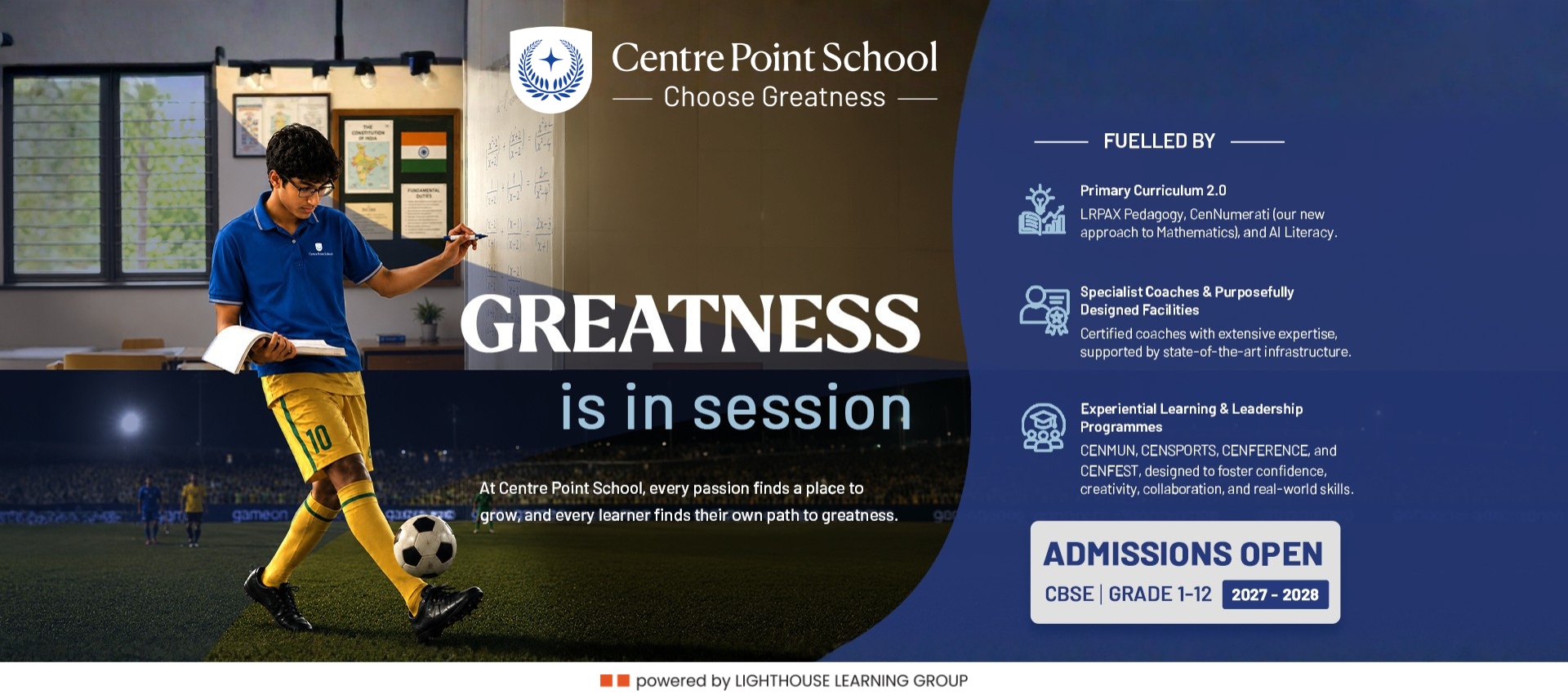
At Centre Point School, we believe that every child is a unique learner who deserves more than just a standard textbook experience. Our approach to multidisciplinary learning in CBSE is built into the very fabric of our daily schedule. We don’t just teach subjects; we create experiences. Whether it’s through our modern facilities or our passionate educators, we ensure that the NEP learning approach is more than just a policy—it’s a reality for every student. We are proud to be a Top school in Nagpur that cares about the growth of every student, preparing them to lead with confidence in an ever-changing world.